
Why Every Consultation at Ozek Law Is With an Attorney
Other languages: Türkçe · Español · Français · العربية
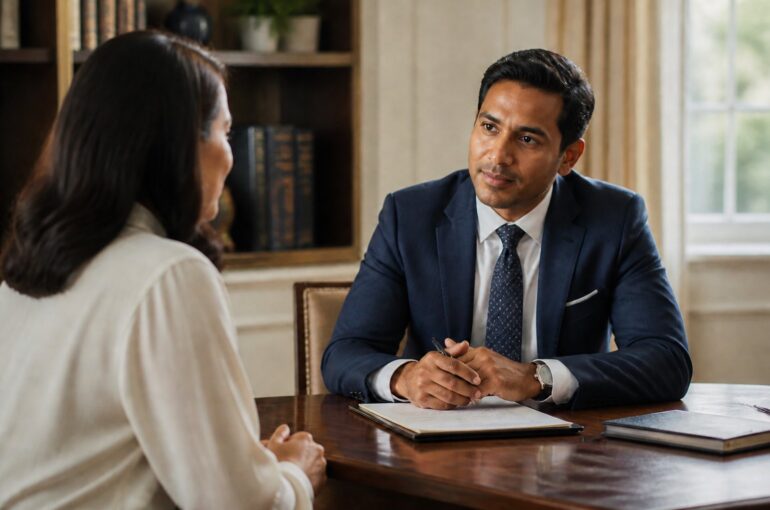
When you bring a legal problem to Ozek Law Firm, the first person who hears your story and tells you what it means is an attorney. Not an intake specialist, not a case manager, not a paralegal reading from a script. Every consultation with an attorney here is exactly that, including the very first one. We want clients to know how we work before they call us, why we work this way, and what we believe the relationship between a client and a lawyer should be.
You go to a doctor to see a doctor
Nobody goes to a hospital hoping to explain their symptoms to the receptionist. The receptionist books the appointment; the doctor listens, examines, asks the follow-up questions and decides what the problem is. Everyone understands why: the questions a doctor asks depend on the answers you give, and only someone trained to diagnose knows which answer matters.
Legal work is the same. People come to a law firm to speak to a lawyer. They are trusting someone with their status in this country, their family, their business or their savings, and they deserve to tell that story directly to the person who is trained, licensed and responsible for deciding what to do about it.
How the gatekeeper model works, and where it goes wrong
Many firms, often larger ones handling a high volume of calls, place a layer of non-attorney staff between the client and the lawyer. An intake specialist or case manager takes the first call, records the facts on a form, decides what kind of case it is, and passes a summary to an attorney who may never speak to the client before the strategy is set. The model exists for understandable reasons: it saves attorney time and lets a firm take more calls.
The difficulty is that a screener does not know what they are not hearing. In immigration and business matters the fact that decides a case is often one the client did not think was important: a short overstay years ago, an old arrest that was dismissed, a prior marriage, a visa refusal at a consulate, a company that was never properly capitalised. A trained attorney hears the first answer and asks the second question. A form does not.
When the first conversation goes wrong, the error travels. A case placed in the wrong category, a deadline treated as routine, a risk never raised: the attorney who later inherits the file is working from someone else’s summary of someone else’s understanding. The case may pass through several hands, and the client may find that the lawyer responsible for it is never available to talk.
There is also a professional line. Legal advice is the practice of law, and the rules of professional conduct allow only lawyers to give it (ABA Model Rule 5.5; in Maryland, Rule 19-305.5). Non-lawyer staff are valuable, but the rules require that their work be supervised by a lawyer who remains responsible for it (ABA Model Rule 5.3; Maryland Rule 19-305.3). We would rather not ask anyone to stand close to that line on the first day of a client’s case.
What one-to-one means at Ozek Law
One-to-one does not mean that an attorney personally performs every task. It means that the judgement in your case, and every conversation in which your situation is assessed or advice is given, belongs to an attorney. This is how the work is divided:
| Stage | Who you speak to |
|---|---|
| Initial consultation | A licensed attorney |
| Choosing the route and the strategy | Your attorney |
| Questions about your case while it is open | Your attorney, who knows the file |
| Interview and hearing preparation | Your attorney |
Why it matters most in immigration
Immigration mistakes are unusually hard to undo. A misstatement on a form can be treated as misrepresentation, a missed fact can surface years later at a naturalisation interview, and a filing made in the wrong order can close a door that was open. Many of our clients are also explaining their situation in a second language, or relying on documents from another country’s legal system. Those are precisely the conversations where nuance gets lost, and where a lawyer’s follow-up questions matter most.
The same is true for founders and investors. Whether a company should be formed in Delaware or Maryland, how it is capitalised and who owns what are business-law questions, but in an E-2 or L-1 case they are also immigration questions. They need to be answered together, by someone who sees both.
What we are not saying
We are not saying that firms built differently cannot do good work; many do, and their staff are often skilled. We are saying that this is a choice, that we have made the opposite one on purpose, and that clients should know which kind of firm they are hiring before they pay a retainer.
Ask these questions, of us or of anyone else. Who will I speak to at the consultation, and are they an attorney? In which state are they admitted? Who decides the strategy for my case? Who answers when I have a question after I sign? Will my attorney prepare me for, and attend, my interview or hearing? The answers tell you what kind of relationship you are entering.
What you should do now
- Write down your history before the consultation: every entry to the U.S., every status, any refusal, arrest or prior application, even if it seems irrelevant.
- Bring the documents you have, and tell the attorney about the ones you do not.
- Check that the lawyer you speak to is licensed: every state bar publishes a public attorney search, and EOIR publishes a list of disciplined immigration practitioners.
- Never rely on a notario, consultant or “immigration agent” for legal advice. Only an attorney or a DOJ-accredited representative may represent you before USCIS or an immigration court (8 CFR 292.1).
Frequently asked questions
Is the initial consultation at Ozek Law Firm with an attorney?
Yes. Every consultation at Ozek Law Firm, including the first one, is conducted by a licensed attorney.
Can a paralegal or legal assistant give me legal advice?
No. Giving legal advice is the practice of law, which only licensed attorneys may do. Paralegals and legal assistants may help prepare documents and gather information, but under the rules of professional conduct their work must be supervised by a lawyer who remains responsible for it.
Will I be able to speak to my attorney after I hire the firm?
Yes. Questions about your case, its strategy and its risks are answered by your attorney, who knows your file.
Why does it matter who conducts the first consultation?
Because the first conversation frames the case. A fact that seems minor to a client, such as an old overstay, a dismissed arrest or a visa refusal, can decide which route is open. An attorney knows which follow-up questions to ask; a screener working from a form may not, and an error made at intake can carry through the whole case.
How can I check that the person advising me is a lawyer?
Ask in which state they are admitted, then search that state bar’s public attorney directory. For immigration matters, EOIR also publishes a list of practitioners who have been disciplined. A notario, consultant or immigration agent is not a lawyer and may not give legal advice.
Ozek Law Firm, LLC · Tolga Ozek, Attorney at Law
4500 East West Highway, Suite 150, Bethesda, MD 20814
2 Wisconsin Circle, Suite 700, Chevy Chase, MD 20815
+1 (202) 854-8545 · info@ozeklaw.com · ozeklaw.com/contact
Tolga Ozek is the founder of Ozek Law Firm, LLC in Bethesda, Maryland. He is admitted in Maryland, New York and the District of Columbia. His practice covers business and immigration law, including investor and intracompany-transfer visas, employment-based immigration, family-based immigration and adjustment of status.
Tell your story once, to the person who will be responsible for it. Consultations are confidential.
This page is for general information only and does not constitute legal advice. Attorney Advertising. It describes how Ozek Law Firm, LLC conducts consultations as of 28 October 2026, and refers to ABA Model Rules 5.3 and 5.5, Maryland Rules 19-305.3 and 19-305.5, and 8 CFR 292.1. It is not a statement about any particular firm. No attorney can guarantee an outcome.
Ozek Law Firm, LLC · 4500 East West Highway, Ste 150, Bethesda, MD 20814 · 2 Wisconsin Circle, Ste 700, Chevy Chase, MD 20815 · +1 (202) 854-8545 · info@ozeklaw.com · www.ozeklaw.com
Licensed in Maryland, New York and Washington, D.C.; federal immigration practice across the United States. Consultations in English, Turkish, Spanish, Arabic, Russian and Chinese.
